

More Info

Communication shapes how we connect, learn, and express ourselves. When speech or language challenges make it difficult to communicate, it can impact confidence, relationships, and daily life. Speech therapy helps individuals develop the skills they need to speak clearly, understand others, and communicate with ease.
Why Speech and Language Therapy?
What is a Speech and Language Disorder?
A speech and language disorder happens when someone has difficulty speaking, understanding, or using words effectively. This can include trouble pronouncing sounds, forming sentences, or processing what others say. These challenges can affect children and adults in different ways, making communication harder in school, work, and social settings.
A speech-language pathologist (SLP) is a licensed professional who evaluates, diagnoses, and treats speech, language, and communication disorders. SLPs work with children and adults to improve speech clarity, language skills, fluency, and social communication, helping them express themselves with confidence.
What is a Speech-Language Pathologist?
What Does Speech and Language Therapy do?
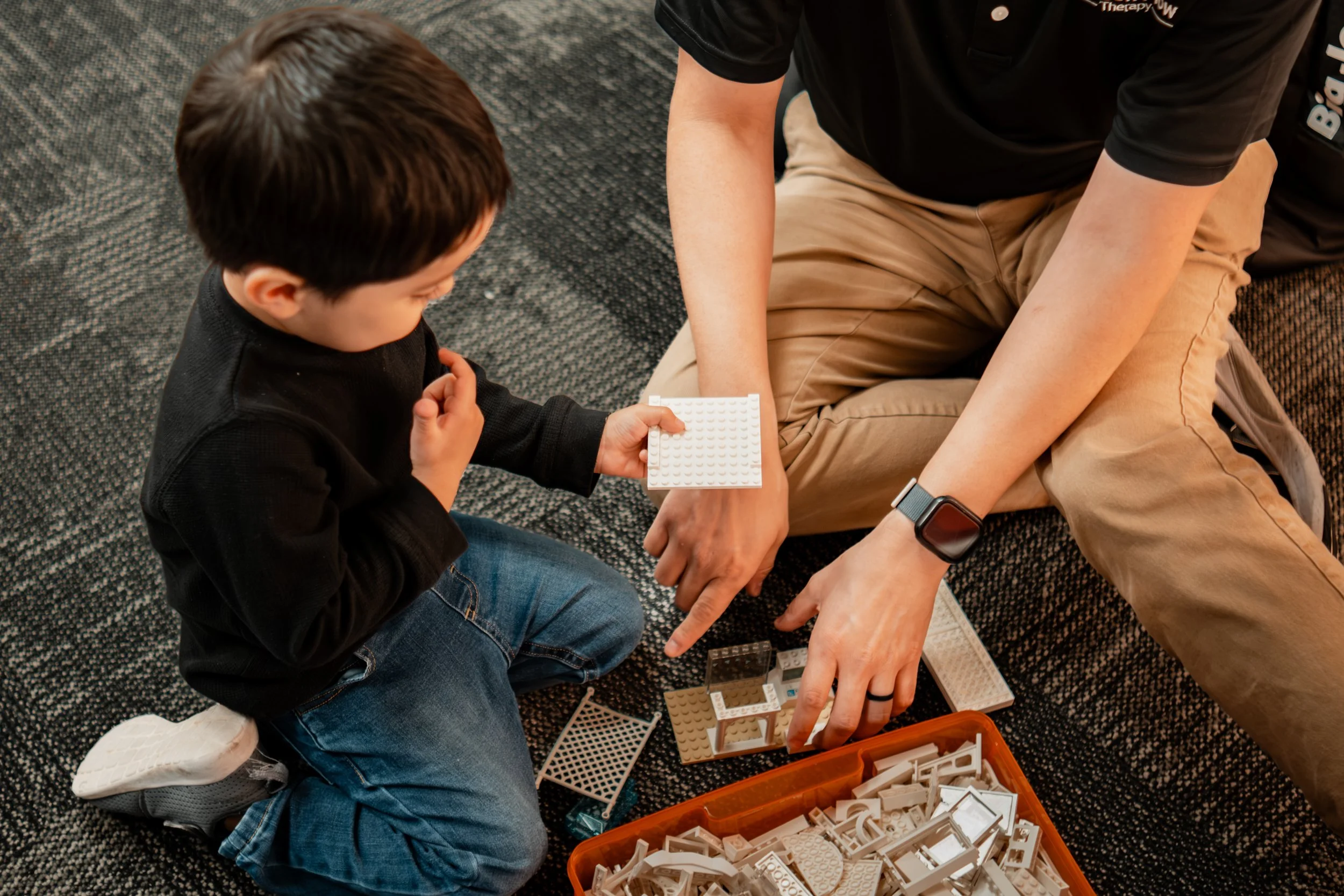
Speech therapy helps improve communication by strengthening speech clarity, language skills, and confidence. A speech-language pathologist (SLP) provides personalized evidence-based strategies to help individuals express themselves better, whether it’s through clearer speech, stronger vocabulary, or better conversation skills.


FAQS
-
We provide speech therapy for children as young as 4 years old through young adults.
-
Currently, we provide in-person therapy in Austin, TX.
Teletherapy options may be available upon request and may come soon. -
Each session lasts 60 minutes, with time dedicated to direct therapy and parent communication as needed.
-
The frequency of therapy depends on the individual’s needs and/or severity of communicative abilities. Most clients attend once or twice a week for consistent progress.
-
We specialize in treating speech sound disorders and receptive/expressive language disorders. We also have extensive experience working with individuals with special needs. Our owner has worked closely with children with autism for over five years, providing personalized therapy to support their communication development.
-
We are currently private pay only. However, we are looking at options to open up to insurance companies in the future.
-
A comprehensive assessment includes standardized testing, observations, and a discussion of concerns. Afterward, we provide a detailed report with recommendations.
-
If your child struggles with pronunciation, understanding language, forming sentences, or communicating clearly, an evaluation can help determine if therapy is needed.
-
Speech therapy sessions are one-on-one with the speech-language pathologist to ensure focused intervention. However, if behavior is a concern, parents may be present during sessions. We also encourage parent involvement by providing strategies and updates to help support progress at home.
-
At Speech Flow Therapy, our foundation is built on both faith and science. We use evidence-based speech therapy techniques backed by research to ensure effective treatment.
At the same time, our approach is rooted in faith, compassion, and integrity, ensuring that every client is supported with patience, understanding, and encouragement. While therapy is always guided by clinical expertise, we believe that faith adds an extra layer of purpose, care, and hope to the process. -
We provide personalized, one-on-one therapy in a setting that prioritizes both clinical expertise and a compassionate, faith-based approach. Unlike larger clinics, we take the time to truly understand each client and tailor therapy to their specific needs.
-
No!
Speech Flow Therapy welcomes everyone, regardless of background or beliefs. Our goal is to provide high-quality speech therapy in a supportive and caring environment. -
We work with children and young adults who experience difficulties with speech sound disorders (articulation), expressive and receptive language, stuttering, social communication, and more.
-
These credentials stand for Master of Science (M.S.) in Speech-Language Pathology and Certificate of Clinical Competence (CCC-SLP), awarded by the American Speech-Language-Hearing Association (ASHA). This certification represents a high standard of excellence in the field, similar to how doctors can become board certified. While not required to practice, it ensures advanced training and expertise. Learn more about ASHA’s CCC requirements here.
-
You can schedule a free consultation to discuss concerns and determine the next steps. Contact us to get started!
Contact us
Omar@speechflowtherapy.com
(956)-800-0450
4557 HWY 71 E.
Del Valle, TX 78617